
🎁 FREE USB CHARGING CABLE with $100 Order • Code: CHARGE426 • Learn More →
Timing Chain Stretch: Causes, Symptoms, and How to Prevent It
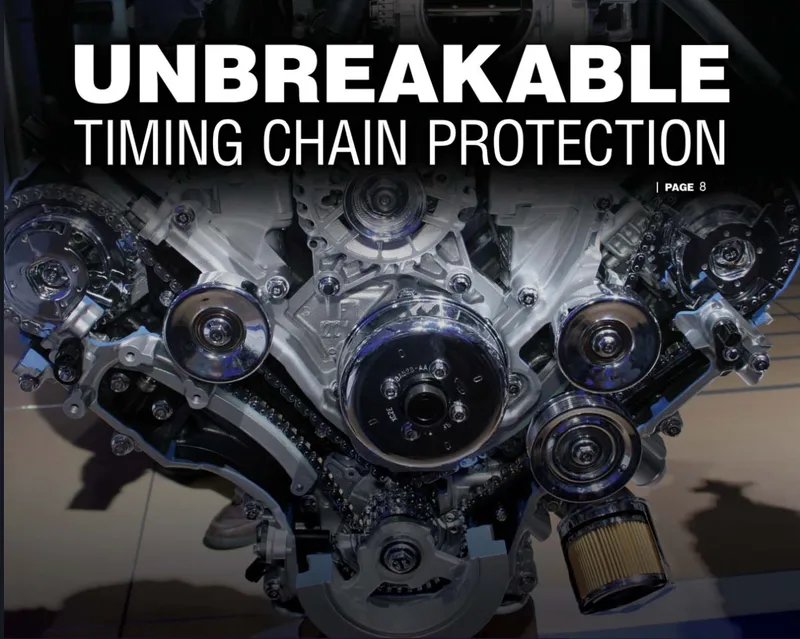
There is an essential component to the operation of any engine that often goes unnoticed until trouble strikes — the timing chain. But like any component, the timing chain can wear, leading to expensive issues or even catastrophic engine failure.
The timing chain provides a mechanical linkage that ensures all moving parts work in perfect harmony. It connects the camshaft, which controls the opening and closing of the valves, to the crankshaft, which is attached to the pistons. In this way, the timing chain ensures that fuel and air enter the engine and exhaust gases exit in sync with the motion of the pistons.
Critical Engine Component Alert
Your work truck or towing rig relies on a critical component that most drivers never think about — the timing chain.
When it works: Your engine runs smoothly
When it fails: $3,000-$5,000+ repair bill or complete engine replacement
Protect Your Timing Chain — Start With the Right Oil
Timing chain wear is preventable. The right synthetic oil fights soot buildup and keeps chain components protected under heat and load.
Get AMSOIL Signature Series NowPreferred Customers save up to 25% on every order
Unlike timing belts, which are made of rubber and require periodic replacement, timing chains are constructed from durable metal links, much like a burly bicycle chain. Timing chains are housed inside the engine where they are protected from contamination and lubricated by engine oil to reduce friction and wear. This design allows them to last significantly longer, hopefully for the life of the vehicle, provided they are properly maintained.
However, even with their robust design, timing chains are not immune to wear. Over time, factors such as extreme use, insufficient lubrication, soot buildup, high mileage or poor maintenance can lead to issues like chain stretch or damage to the tensioners and guides. These problems can disrupt the engine’s timing, leading to symptoms such as rough idling, engine misfires or even catastrophic failure.
Timing-Chain Stretch: The Silent Engine Killer
What is timing-chain stretch?
When the chain lengthens beyond its original specification, disrupting engine timing and causing poor performance.
The Leading Culprit: Soot in the Motor Oil
The Modern Soot Problem
T-GDI Engines Produce More Soot Than:
- Old diesel engines without particulate filters
- Traditional port-injected gasoline engines
- Previous generation naturally aspirated engines
Real-World Example:
Ford issued Technical Service Bulletin #14-0194 in 2020 acknowledging timing-chain wear in certain 3.5L EcoBoost* engines due to soot accumulation. This is one reason why choosing the right synthetic oil matters more than ever in modern engines.
How Soot Damages Your Timing Chain
The Destruction Process:
-
Soot Formation
- Tiny particles form during combustion
- Particles combine into larger, abrasive chunks
- Oil filter can’t catch them fast enough
-
Chain Wear Begins
- Soot lodges between chain links and pins
- Particles act like sandpaper
- Metal surfaces slowly wear away
-
Chain “Stretches”
- Clearances between components increase
- Chain develops slack (not actual stretching)
- Tensioner reaches its adjustment limit
-
Engine Failure
- Camshaft/crankshaft sensors trigger codes
- Engine enters “limp” mode
- Chain jumps timing, causing catastrophic damage
Warning Signs of Timing Chain Problems
Detecting timing-chain problems early can prevent major repairs down the road. Watch for these critical warning signs:
1. Unusual Noises
What to listen for:
- Rattling or clanging sounds, especially at startup
- Metal-on-metal grinding noises
- Unusual engine clatter
These sounds often indicate timing-chain slack or failing tensioners.
2. Engine Misfires or Rough Idling
Key symptoms:
- Engine stumbles or hesitates
- Rough, unstable idle
- Loss of power during acceleration
A stretched timing chain disrupts the engine’s precise firing sequence, causing these performance issues.
3. Check Engine Light
Common timing chain error codes:
- P0016 - P0019: Camshaft/crankshaft correlation errors
- P0340 - P0349: Camshaft position sensor issues
- P0335 - P0339: Crankshaft position sensor problems
These codes often indicate timing chain stretch or failure.
4. Poor Engine Performance
Performance degradation includes:
| Symptom | Impact |
|---|---|
| Reduced Power | Sluggish acceleration, difficulty climbing hills |
| Poor Fuel Economy | 10-20% increase in fuel consumption |
| Engine Hesitation | Delayed throttle response, surging |
The Role of Motor Oil
Timing chains depend on proper lubrication to reduce friction and wear between the chain links, sprockets and tensioners. Without adequate lubrication, these components can overheat and wear prematurely.
If you drive a T-GDI engine that’s known to suffer from timing-chain stretch, it’s a smart move to use a premium synthetic oil and a high-quality oil filter to help fight soot-induced timing-chain wear.
Turbo and GDI engines also face LSPI (low-speed pre-ignition), another reason to choose an oil engineered for modern powertrains. To combat soot, the industry developed the Sequence X Engine Test (ASTM D8279) specifically to measure an oil’s ability to resist soot and fight timing-chain stretch. It’s part of the API SP and ILSAC GF-6 motor oil specifications introduced in May 2020 and the latest API SP and ILSAC GF-7 specifications released in March 2025.
The test uses a Ford 2.0L EcoBoost engine run a total of 216 hours throughout a series of cycles. The timing chain is measured after break-in and again following the test. The pass/fail criteria is d0.085% timing-chain elongation.
The AMSOIL Advantage
Proven Protection
All AMSOIL synthetic motor oils have passed the rigorous Sequence X Engine Test (ASTM D8279), demonstrating superior protection against timing-chain stretch.
AMSOIL Products That Protect Your Timing Chain:
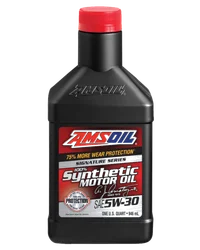
AMSOIL SIGNATURE SERIES 5W-30 100% SYNTHETIC MOTOR OIL
Product Code: ASLQT-EA
National Synthetics is an authorized AMSOIL dealer. Links earn us a commission at no extra cost to you. Full disclosure
Best Product for Timing Chain Protection
AMSOIL Signature Series is the top choice for engines prone to timing chain wear. It delivers 75% more wear protection than required by industry standards, passes the Sequence X soot test with margin, and supports drain intervals up to 25,000 miles. Compare all viscosities on the Signature Series product page.
AMSOIL vs. Conventional Oil: Timing Chain Protection
| Property | AMSOIL Signature Series | Conventional Oil |
|---|---|---|
| Sequence X Test | Passes with margin | Often marginal or fails |
| Soot Handling | Disperses and suspends soot particles | Soot agglomerates faster |
| Wear Protection | 75% more than industry standard | Meets minimum standard |
| Drain Interval | Up to 25,000 miles (normal) | 3,000-5,000 miles |
| Acid Neutralization (TBN) | 28% more than Mobil 1* | Depletes quickly |
| LSPI Protection | 100% protection in GM dexos1 test | Varies by formulation |
Want to see how Signature Series compares head-to-head? Read the full AMSOIL vs. Mobil 1 comparison.
How AMSOIL Protects Your Timing Chain
1. Enhanced Wear Protection
Key Technologies:
- Naturally shear-resistant synthetic base oils
- Top-tier, shear-stable viscosity improvers
- Robust anti-wear additive package
- Superior film strength in extreme conditions
PROVEN RESULT: Signature Series provides 75% MORE ENGINE PROTECTION against wear and horsepower loss than required by industry standards.1 See what that looks like after 500,000 miles of real-world use.
2. Outstanding Engine Cleanliness
How Sludge Forms:
- Combustion byproducts accumulate
- Oxidation creates acidic compounds
- Contaminants bond together
- Deposits form on critical components
AMSOIL’s Defense:
- 90% BETTER sludge protection2
- 28% MORE acid-neutralizing power than Mobil 1*3
- Heavy-duty detergent additives
- Keeps timing chains and tensioners clean
3. Superior Thermal Durability
Extreme Temperature Performance:
| Condition | AMSOIL Protection |
|---|---|
| Cold Starts | Superior cold-cranking viscosity for immediate protection4 |
| High Heat | Maintains viscosity under extreme temperatures |
| Heavy Loads | Shear-stable formula resists breakdown |
| Extended Intervals | Consistent protection throughout service life |
Frequently Asked Questions
What causes timing chain stretch?
Soot buildup in motor oil is the leading cause, especially in turbo and GDI engines. Soot particles lodge between chain links and pins, acting like sandpaper. Poor oil quality, skipped oil changes, and low oil levels all accelerate wear. The chain doesn't actually stretch — the pins and bushings wear down, increasing total chain length.
What are the symptoms of a worn timing chain?
Rattling or clanging at startup, rough idle, engine misfires, poor fuel economy, and check engine codes P0016-P0019 (camshaft/crankshaft correlation errors). Metal shavings on the dipstick or in drained oil are a late-stage warning sign.
How much does timing chain replacement cost?
Typically $3,000-$5,000+ including parts and labor. The repair requires extensive engine disassembly to access the chain, guides, and tensioners. Prevention with quality synthetic oil costs a fraction of the repair.
Can synthetic oil prevent timing chain problems?
Yes. High-quality synthetic oils resist soot-induced wear far better than conventional oils. All AMSOIL synthetic motor oils pass the Sequence X Engine Test (ASTM D8279), which specifically measures resistance to timing chain stretch. See the Signature Series product page for full test data.
How often should I change oil to protect my timing chain?
Follow your manufacturer's recommended interval — or shorter if you do mostly city driving, short trips, or towing. AMSOIL Signature Series supports extended drain intervals up to 25,000 miles under normal conditions, but the key is never skipping a change. Read our oil change interval guide for details.
Which vehicles are most prone to timing chain problems?
Turbocharged and GDI engines are most susceptible because they produce more soot than traditional port-injected engines. Common examples include Ford EcoBoost 3.5L and 2.0L, GM Ecotec, and Hyundai/Kia Theta II GDI engines. Ford issued TSB #14-0194 acknowledging timing chain wear in certain EcoBoost engines due to soot buildup.
Chain reaction
While often overlooked, the timing chain plays a crucial role in engine performance. Staying alert to potential problems and responding quickly can help avoid major repairs or even catastrophic engine failure. AMSOIL motor oils provide excellent protection for timing chains and other components, helping ensure engine performance, reliability and longevity.
1Based on independent testing of AMSOIL Signature Series 0W-20 using the ASTM D6891 standard test. 2Based on independent testing of AMSOIL Signature Series 5W-30 in the ASTM D6593 engine test for oil screen plugging as required by the API SN specification. 3Based upon independent testing of Mobil 1 Annual Protection & Full Synthetic 5W-30 and AMSOIL Signature Series 5W-30 in ASTM D2896. Oils purchased July 2020. 4Based on independent third-party testing in the industry-standard ASTM D5293 Cold Crank Simulator test as required by SAE J300
Don’t Pay $5,000 for a Repair That the Right Oil Prevents
Timing chain wear is cumulative and irreversible — but preventable.
AMSOIL Signature Series passes the Sequence X soot test and provides 75% more wear protection than the industry standard.

Protect Your Engine with AMSOIL
Experience the difference premium synthetic lubricants make. Shop with confidence through your authorized AMSOIL dealer.
Browse AMSOIL Products